Black Women’s Equal Pay Day is July 21, 2026
-
63 cents for “all earners” (full time year-round + part time and part year)
-
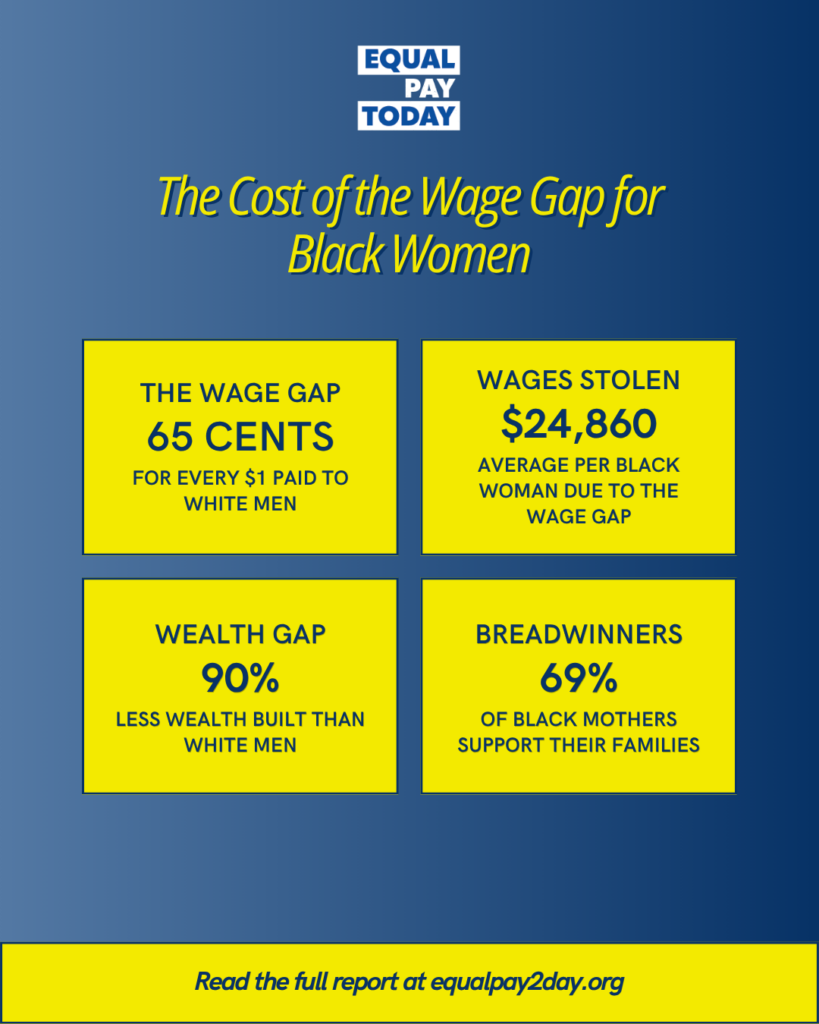
65 cents for full time, year round workers
65 Cents. That’s the Gap.
On this day, we highlight the fact that the wage gap for Black women compared to non-Hispanic white men is 65 cents for full-time, year-round workers. The wage gap widens to 63 cents when looking at all Black women earners, including full-time, part-time, and part-year workers, as compared to all working non-Hispanic white men.
These wage gaps are not just numbers. They contribute directly to the deepening affordability crisis.
The Wage Gap Isn’t Just a Number
If the annual wage gap were eliminated, a typical Black woman working in the United States would have enough money to pay for approximately thirty months of food, twenty-three months of child care, or twelve months of mortgage payments.
Underpaid, Undervalued, and Out of Reach
Black women continue to be underpaid, undervalued, and overrepresented in low-paid jobs, with little opportunity for advancement and important workplace protections out of reach. At a time when Black women are facing rising costs and rising unemployment, this administration is continuing to dismantle the tools that help ensure everyone can access job opportunities without facing discrimination.Since January 2025, existing disparities have been compounded by attacks on public benefits, anti-discrimination enforcement, and the federal workforce.
This Administration Is Rolling Back the Tools That Protect Workers
In the effort to dismantle the federal government, the administration is attempting to eliminate the collection of critical data on workforce demographics (EEO-1 data) and has targeted numerous agencies where women and people of color make up a majority of workers. Black women have been disproportionately harmed by these cuts. At the same time, this administration has ended government contract employment opportunities and attacked the diversity, equity, and inclusion programs that strengthen the American workforce.
As we continue to fight for equal pay, we know there are many factors and forms of discrimination that impact Black women’s pay throughout their careers, reducing their economic security and stability. As opportunities are dismantled, Black women, already underrepresented in higher-paid jobs, have less access to long-term economic security.
Erasing the Data Erases Accountability
On this #BlackWomensEqualPayDay, we call on policymakers and the public to take action.
We call on the Equal Employment Opportunity Commission to abandon its efforts to eliminate the EEO-1 data collection, a critical tool towards effective anti-discrimination enforcement and accountability.
Use our social media toolkit to tag the EEOC!
Congress and the EEOC Must Act Now
We call on Congress to pass legislation aligned with the Working Women’s Bill of Rights, which affirms the fundamental right of all women to equal pay, pay transparency, safe workplaces free from discrimination and harassment, access to affordable health care, paid leave, child care, fair scheduling, and the ability to organize for better working conditions.
Together, we must protect critical civil rights infrastructure, invest in working women, and build a future where Black women, and all workers, are paid fairly, treated with dignity, and able to thrive.
Voice your support for the Working Women’s Bill of Rights here!